
Rockfall Protection Net
On mountain roads, railways, mines, and hydropower projects, the most dangerous thing is “stones from the sky”. Once rockfall hits vehicles, people, or buildings, the consequences are serious. Rockfall protection net is designed to catch, block, and guide falling rocks, but many people only know “buy the net” and don’t understand the system behind it. In the end, either the protection is not enough, or they get trapped by pricing tricks.
FLEXIBLE STEEL WIRE ROPE ROCKFALL PROTECTION NET
11/30/20254 min read
Rockfall Protection Net: Functions, Applications, and Hidden Traps When Buying
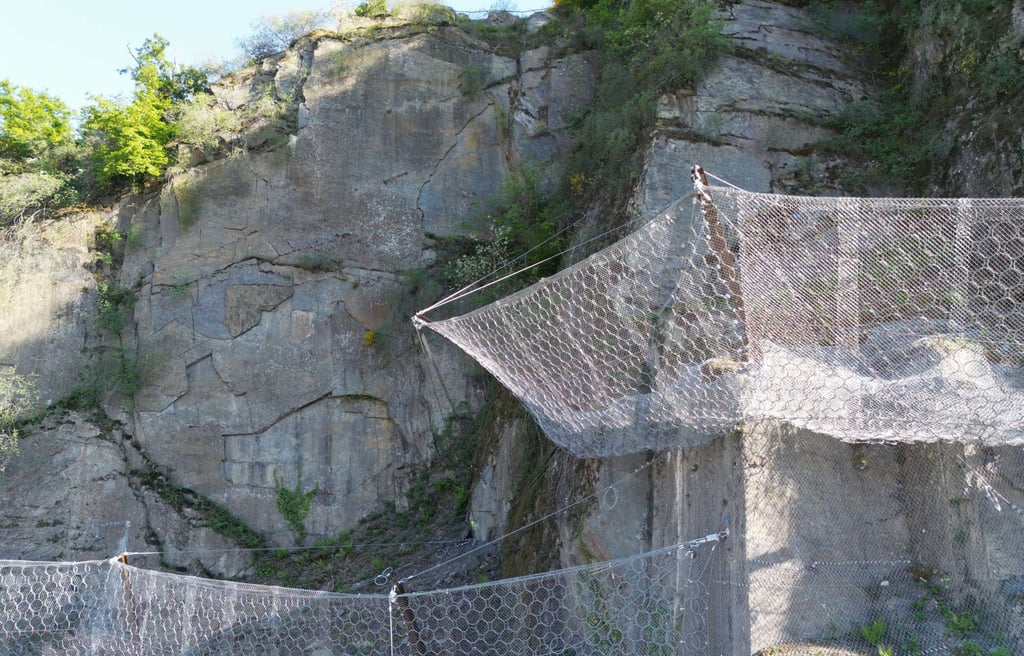
Rockfall protection net is not just “a piece of mesh” – it is a complete safety system designed to control falling rocks, debris, and unstable slopes. When it’s selected and installed correctly, it protects roads, railways, buildings, and people at the foot of a slope. When it’s done poorly, it becomes a dangerous decoration that fails exactly when you need it most.
1. What rockfall protection net actually does
A good rockfall system has three main functions:
Core Functions of a Rockfall System
Retention and interception
It catches falling rocks, soil blocks, and debris before they hit traffic, pedestrians, or structures. For high energy rockfall, the system must not only stop the block but also stay anchored and stable after impact.Energy dissipation
Modern rockfall systems use high-tensile steel wire ropes, ring nets or rope nets, support ropes, brake rings / energy dissipators, and anchor systems. These components deform and slide under load to spread the impact over time and over a larger area, turning a sharp shock into a controllable, slower load.Guiding the rockfall path
Instead of letting rocks bounce unpredictably down a slope, the system slows them and directs them to a safe accumulation zone behind or under the net, away from roads and buildings.
Active vs Passive Systems
From a design point of view, there are two major categories:
Active (slope-face) protection
Nets and wire ropes are installed directly on the slope surface and fixed with anchors and boundary ropes. The goal is to stabilize loose blocks and shallow slides so that they never detach and fall.Passive (interception) protection
Flexible barriers are installed at the toe of the slope or along the rockfall trajectory. Steel posts, upper and lower support ropes, ring / rope nets and energy dissipators create a “flexible fence” that catches moving rocks. Systems are classified by energy level (for example 250 kJ, 500 kJ, 1000 kJ, 2000 kJ and above).
Typical applications include mountain highways, railways, cut slopes for tunnels and portals, open-pit mines and quarries, power line corridors, hydropower and wind farm access roads, and cliff-side tourist paths – anywhere people or infrastructure are exposed to falling rock.
2. Common traps when purchasing rockfall protection net
On paper, many systems look similar. In real projects, the difference between a qualified system and a cheap copy is huge. The most common traps are:
Only looking at the “energy class”, ignoring the real configuration
Some suppliers will simply quote “1000 kJ system” or similar, without giving full details for wire rope diameters, mesh type, post sizes, anchor length and spacing, brake ring type, or foundations. This makes it easy to cut corners later.
What to do: always request a complete system configuration list + typical layout drawings + full-scale impact test report for that specific system, not just a label.
Hidden material reductions
Hidden material reductions: smaller diameters, lighter coatings, thinner posts
Classic tricks include using 7 mm rope instead of 8 mm, reducing zinc coating, using smaller or thinner H-beam posts, or reducing anchor diameter and number. The system might look similar from a distance but has far less capacity.
What to do: spot-check with simple tools – measure rope and post wall thickness with calipers, compare actual weight to theoretical weight, and review coating thickness certificates.
Comparing only price per square meter
Comparing only price per square meter, not total system + installation cost
A “cheap” material offer might require much more complex installation, higher labour and equipment costs, or extra repair work later. A low energy class system used on a high-risk slope may eventually need expensive upgrading.
What to do: evaluate total life-cycle cost: materials + installation + maintenance + risk. Saving a little money on steel is meaningless if the system fails in the first serious event.
Copy-paste designs without considering geology
Copy-paste designs without considering geology and slope geometry
The same “standard” drawing is sometimes used in completely different conditions: hard rock, soft rock, thick colluvium, high slopes, or short cuttings. But anchor length, embedment, spacing, post foundations, and system type should all depend on geology, slope height, block size distribution, and rockfall trajectory.
What to do: any serious supplier will ask about geology, slope height, block size, and available survey data. If they never ask for technical information and just send one standard solution for every project, that’s a red flag.
Ignoring spare parts and long-term support
Ignoring spare parts and long-term support
Over 10–20 years, parts of the system will be damaged by impacts or corrosion and need replacement: ring nets, brake rings, mesh panels, anchors in local zones, etc. If the manufacturer disappears, changes models each year, or does not commit to a spare-parts policy, maintenance becomes painful and expensive.
What to do: include in the contract spare-part availability, typical prices, and guaranteed support period.
No full-scale testing or weak documentation
No full-scale testing or weak documentation
For high-energy barriers (especially ≥ 1000 kJ), relying only on calculations is not enough. Without full-scale impact testing, it is impossible to be sure how the system behaves under real rockfall conditions.
What to do: insist on full-scale impact test reports from recognized labs, including photos, test setups, impact energies, maximum deflection, residual height, and damage state.
3. Key takeaway
You are not buying just wire and posts – you are buying a safety system that will be tested by gravity and time. Choose the correct system type and energy level for your slope, make sure the configuration is transparent, check that materials really match the specification, and confirm long-term support. If you ask detailed questions, demand drawings and reports, and do a few simple checks on site, you can avoid most of the expensive traps and end up with a rockfall protection system that actually works when you need it.